By Tahir Masood (Rafa’el), Foreign Correspondent (Europe)
Imran Khan’s political journey has produced one of the most polarizing movements in Pakistan’s modern era, and critics argue that this influence has reshaped the nation’s moral climate in unsettling ways. Analysts say his appeal among younger and politically inexperienced Pakistanis grew into a form of devotion that often overshadowed critical thinking, institutional respect and fact-based debate.
A central criticism concerns how Khan placed himself at the heart of Pakistan’s survival story. Instead of presenting politics as a collective national process, he cast himself as the lone guardian against collapse. This narrative, observers argue, conditioned supporters to interpret disagreement as betrayal, narrowing the space for rational discourse and amplifying emotional polarization.
His approach toward extremist groups such as the Tehreek-e-Taliban Pakistan intensified these concerns. Although he defended negotiations as a peace strategy, many within Pakistan’s security establishment saw the approach as overly accommodating and misaligned with the severity of the threat. Critics argue that this stance risked giving militant elements breathing room at a time when national security required firmness, not political optimism.
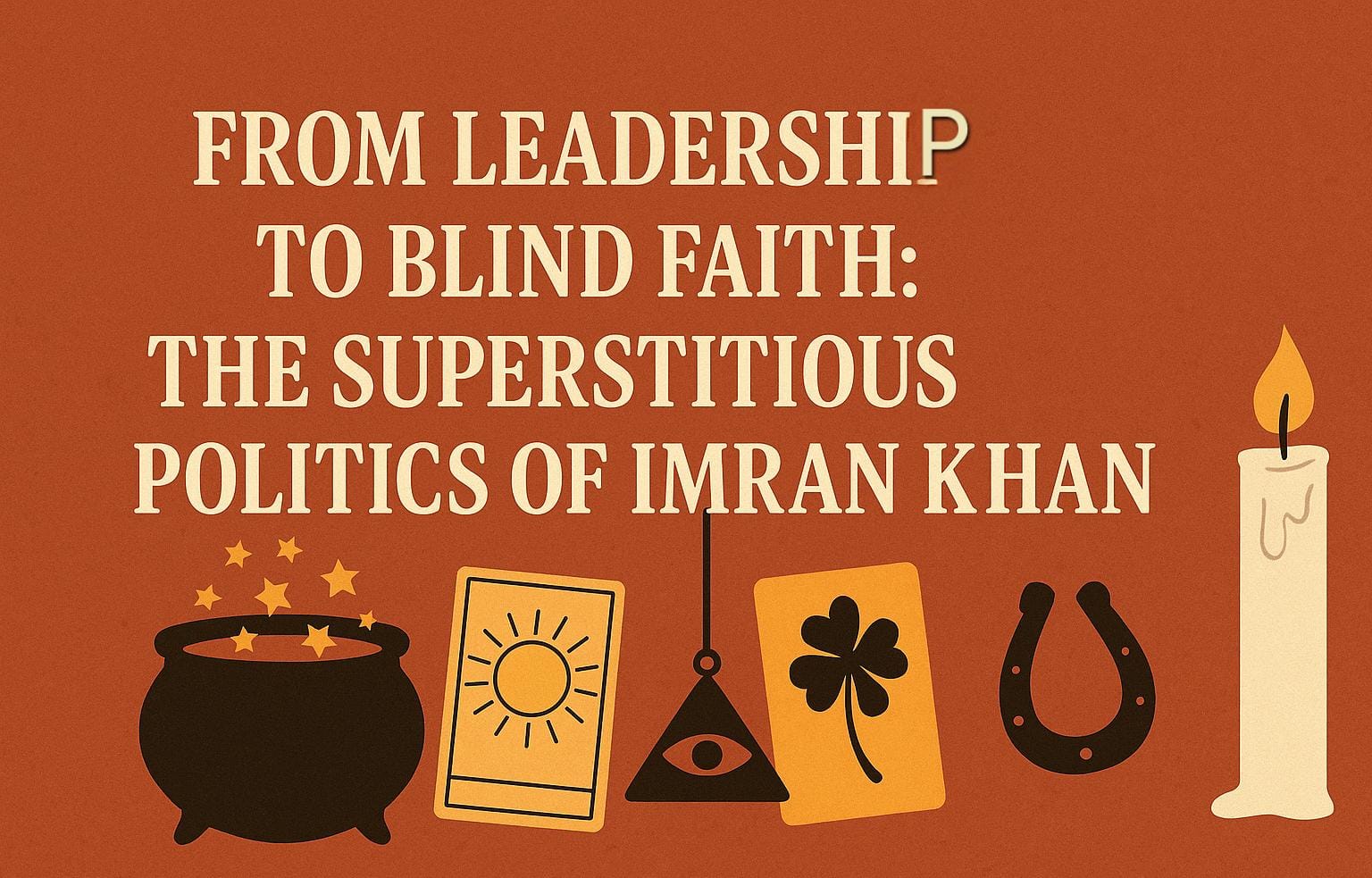
Another point regularly highlighted by analysts is Khan’s reliance on superstitious beliefs in decision-making. From the selection of key political dates to symbolic rituals, critics claim he often leaned on spiritual or astrological guidance rather than institutional advice or expert analysis. This perception fueled wider concerns about his seriousness and judgment on national matters, especially during moments requiring precise, policy-driven leadership.
These concerns intersected with widespread criticism about the alleged influence of his third wife, Bushra Bibi, on political decisions. Opponents and some former insiders claim her guidance—rooted in spiritual and metaphysical practices—played an outsized role in shaping Khan’s political choices. Though unproven, these allegations have circulated widely in political and journalistic circles, contributing to the perception that he was at times guided more by personal spiritual counsel than by state institutions. Detractors argue this dynamic raised serious questions about governance, transparency and his susceptibility to manipulation during moments of political vulnerability.
Khan’s rhetoric on the political stage further deepened the divide. His slogans and televised narratives often painted institutions as conspirators whenever they resisted his will. Analysts say this strategy blurred moral boundaries and replaced substance with emotional agitation. Among younger followers, these narratives eclipsed independent reasoning, giving rise to a style of reflexive loyalty that many describe as a “zombie-like” political culture—energetic, loud, and deeply uncritical.
His foreign policy posture also became a point of contention. Critics argue that some of his international alignments appeared inconsistent with Pakistan’s longstanding stances, including on highly sensitive issues tied to Palestine. Whether grounded or exaggerated, these concerns reinforced the perception that political optics occasionally superseded national priorities during his tenure.
Imran Khan continues to evoke intense loyalty and equally intense criticism. Supporters view him as a reformer confronting entrenched forces; detractors argue that he weakened political maturity, blurred moral clarity, relied on superstition in state matters, and allowed personal influences to shape public decisions. What remains clear is that his impact on Pakistan’s political psychology is profound, leaving the nation to contend with the aftershocks of a movement in which personal mythology often overshadowed institutional reality.
For feedback or correspondence, please contact: Tahirmasood2024@gmail.com