ISLAMABAD:
Pakistan’s policymakers often celebrate every rise in the stock exchange index and every uptick in foreign direct investment (FDI) as a vote of confidence in their economic policies. On the ground, however, no sustainable long-term policy exists beyond firefighting, struggling to secure rollovers of deposits from friendly countries, and obtaining short-term foreign currency loans at higher rates. Exports have failed to reach a comfort zone, and the external sector is being supported largely by overseas Pakistanis’ remittances and Roshan Digital Account inflows.
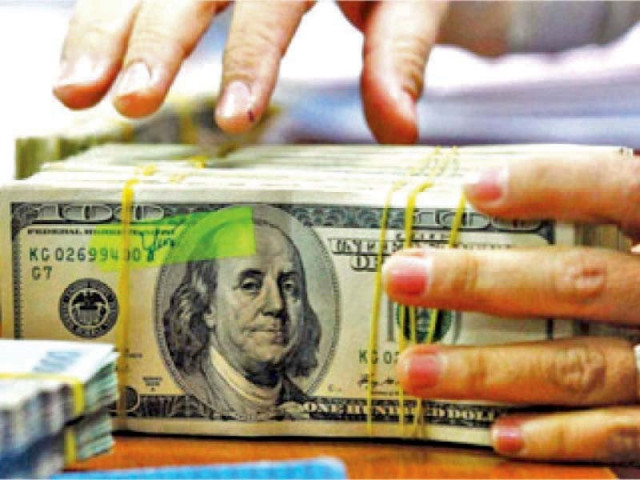
The latest numbers tell a sobering story. In January 2026, Pakistan recorded FDI of $173 million, down from $235 million a year earlier. During 7MFY26, cumulative FDI stood at $981 million compared to $1.66 billion in the same period last year. Net FDI declined 51% year-on-year to $694 million, while portfolio flows remained negative with a $287 million net outflow. Total foreign investment fell 65% year-on-year to $517 million.
These figures are not mere statistical fluctuations; they reflect a deeper structural issue. The central question is not whether FDI is important – it undoubtedly is – but whether Pakistan can realistically attract and sustain foreign investment without first strengthening its domestic investment base.
History across emerging economies shows a simple truth: foreign investors follow local investors. When domestic industrialists expand capacity, reinvest profits, and express confidence in long-term policy stability, foreign capital views the country as credible. When local investors relocate to Dubai, Egypt, or even Sri Lanka, foreign investors take notice and hesitate to land despite promises of lucrative terms.
Domestic investors today face some of the highest cost pressures in the region, despite policy rates having been slashed from 22% to 10.50%. Financing costs remain higher than regional peers and beyond viability for many sectors. Energy tariffs are among the highest in South Asia due to capacity payments and circular debt distortions.
The tax regime is complex and unjust, with multiple levies, advance taxes, minimum turnover taxes, and above all, a super tax that penalises large businesses from local industry to exports. Frequent policy shifts add uncertainty.
The middle class and SMEs, the backbone of the economy, are squeezed by rising costs of gas and electricity with fixed charges, eroding purchasing power and business sustainability. SMEs contribute more than 40% to GDP, self-employment, and job creation.
In such an environment, asking foreign investors to commit long-term capital becomes unrealistic. No global investor will risk billions in manufacturing or infrastructure where domestic players are scaling down.
Pakistan’s debate has tilted toward short-term inflows and stock market rallies as signs of recovery. Yet speculative portfolio flows – the so-called casino capitalism – are volatile by nature. They exit at the first sign of currency pressure or political instability. The $287 million net portfolio outflow this fiscal year highlights this fragility. Sustainable growth does not come from hot money or one-off privatisation deals. It comes from steady domestic capital formation: factories built, machinery imported, skills developed, and exports expanded.
FDI is valuable because it brings not only capital but also technology transfer, management expertise, and access to global markets. Yet in Pakistan, FDI has rarely delivered meaningful technology transfer, workforce skill upgrades, innovation, or significant export expansion – a failure of decision-making.
The Board of Investment (BoI) should be dissolved, and responsibility for investment facilitation reassigned to the Ministry of Commerce to reduce administrative expenditures currently incurred by the BoI. FDI is not a substitute for domestic investment; it complements it.
Countries that successfully attracted large FDI inflows first built strong domestic industrial ecosystems, ensured policy consistency, competitive energy pricing, export-oriented incentives, infrastructure, and simplified taxation. Foreign firms entered markets where local supply chains were already active and profitable.
Pakistan often seeks FDI through incentives and exemptions while ignoring structural constraints that hurt both foreign and domestic investors. Special tax holidays and selective concessions cannot offset systemic inefficiencies. Equal opportunity for local and foreign investors must be the guiding principle.
A serious economic reset is essential. The immediate priority must be to retain and expand local industry, which has borne the brunt of policy uncertainty and rising costs. This begins with lowering the cost of finance through a gradual but credible reduction in interest rates aligned with inflation trends.
Access to long-term industrial financing is critical if businesses are to invest in plant, machinery and technology. Energy sector reform is equally urgent. Capacity payments must be rationalised, expensive contracts renegotiated where possible, inefficient IPP contracts and loss-making government-owned generation companies reviewed, and cross-subsidies that burden industry reduced.
Tax simplification is another pillar of reform. Corporate tax rates should be brought closer to OECD averages while reducing the multiplicity of levies that raise compliance costs and create opportunities for rent-seeking.
A streamlined system focused primarily on income tax and consumption tax would enhance transparency and improve competitiveness. Above all, policy stability is indispensable. Investors require predictability; sudden changes in import tariffs, regulatory duties or tax rules erode trust and delay expansion decisions. If Pakistan improves its domestic investment climate, foreign capital will not require aggressive marketing campaigns. It will come organically.
The Roshan Digital Account has cumulatively attracted $11.9 billion since its launch, including $216 million in January 2026 alone, according to the State Bank of Pakistan. While this signals overseas Pakistani confidence, much of the inflow is parked in government securities or real estate rather than productive industry.
Diaspora funds can stabilise foreign exchange reserves, but they cannot substitute for broad-based industrial expansion. Real growth demands factories, exports and employment. A targeted industrial policy for exports and import substitution, including opportunities for non-resident Pakistanis, is necessary.
Pakistan’s investment-to-GDP ratio remains well below regional peers. Without raising it sustainably to at least 20-25%, economic take-off is improbable. Domestic savings mobilisation and reinvestment of profits under stable taxation and secure property rights are more impactful than chasing volatile foreign flows.
Confidence is the most valuable economic currency. When industrialists feel secure about returns, energy pricing and policy continuity, they reinvest. Unfortunately, visible profitability is often treated with suspicion, as nearly 50 federal and provincial agencies exercise overlapping powers to inspect and even seal business premises.
Pakistan must move beyond optics-driven economics and focus on structural reform. Local investment is not just important – it is foundational. Without it, FDI will remain fragile and episodic. With it, sustainable growth becomes achievable.