By Muhammad Sohail
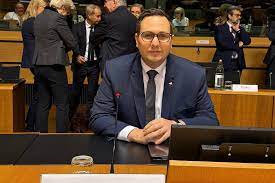
Czech Foreign Minister Jan Lipavský attended the EU Foreign Affairs Council meeting in Luxembourg on Monday, October 20, 2025. He discussed with his European counterparts the ongoing Russian aggression against Ukraine, the situation in the Middle East, and EU relations with the Indo-Pacific. The talks were followed by the EU’s Ministry of Foreign Affairs with the Black Sea and Central Asian countries.
The first item on Ukraine was attended by Ukrainian Foreign Minister Andriy Sybiha. The ministers discussed further military assistance to Ukraine, the use of frozen Russian assets, and the 19th EU sanctions package.
“I am glad that the next sanctions package also includes a proposal that the Czech Republic originally came up with, namely restricting the movement of Russian diplomats within Schengen,” said Jan Lipavský. According to the Czech minister, its approval will establish reciprocity, and the measure also has a security impact.
“We believe that new restrictions against Moscow for its aggression in Ukraine will be approved at Thursday’s European Council meeting (October 23rd),” the Czech minister added.
The meeting also focused on the EU’s relations with the Indo-Pacific countries and strengthening practical cooperation in the region. According to Minister Lipavský, Southeast and East Asia is an increasingly important partner for Europe and the security of Europe and the Indo-Pacific is inextricably linked. “If we want to effectively counter threats from Russia and China, we must not forget this connection,” he said.
The last point was the current situation in the Middle East. The head of Czech diplomacy welcomed the peace plan of US President Donald Trump. “Gaza needs peace, the end of Hamas, humanitarian aid and future reconstruction. Likewise, the security of the State of Israel must be ensured. In discussions with EU ministers, I also supported European humanitarian and security activities in the region,” he added.
The Council meeting was followed by the first ever EU ministerial meeting with the Black Sea and Central Asian countries. The main topics were the security and stability of the Black Sea region in the context of Russian aggression against Ukraine and the development of connectivity, in particular transport corridors between Europe, the South Caucasus and Central Asia.