ISLAMABAD:
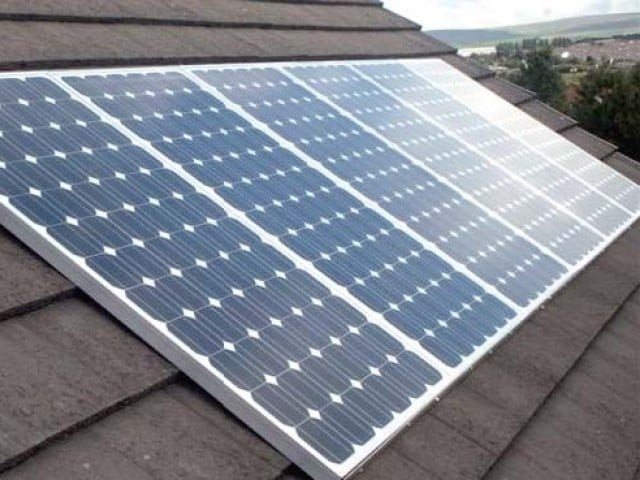
Parliamentarians and even government officials in the National Assembly Standing Committee on Industries and Production on Monday denounced the change in solar net metering policy by the National Electric Power Regulatory Authority (Nepra).
The committee met under the chairmanship of Syed Hafeezuddin, who raised the issue of amendments to the net metering policy as the regulator has now shifted to net billing.
“This policy amendment will have serious implications for the overall reputation of the government,” Hafeezuddin cautioned, adding “when the regulator can honour the commitments made to the IPPs (independent power producers), it should also respect the response from industries and individuals to the net metering policy.” He pointed out that industrial units had opted for the net metering policy by investing in solar power systems “but now they have been left in confusion.”
Members of the standing committee and even secretary industries expressed concern that the move would shatter the trust of investors in government policies as well as push industries away from embracing new energy technologies. The committee noted that the premise used by Nepra to switch from net metering to net billing was based without any rational study by the Ministry of Energy (Power Division).
“Pakistan needed to promote solar and other clean energy sources for industries; it will also help reduce the cost of doing business in the long run,” Hafeezuddin remarked.
The key agenda of the huddle was to review and approve the ongoing development projects under various departments of the Ministry of Industries and Production. Following a rigorous scrutiny, the committee rejected a large number of projects and sought a monitoring report from the Planning Commission.
Members of the NA committee were dismayed by the delay in completion and escalating costs of most of the projects. “I know and I understand that Covid and dollar crises and the change in government had some impact in all matters,” Dr Mehreen Bhutto said. “But all projects have been delayed by six to nine years and the briefs given to us are always incomplete.”
Panel members including Abdul Hakeem Baloch and Shahid Usman dismissed the claims made by the departments working under the Ministry of Industries regarding scores of development projects.
Discussing the projects being executed in Hub (Balochistan) and Karachi, the committee chairman admonished relevant officials, saying that he had visited those areas where the ground reality was different.
While Shahid Usman had a different picture of projects in Gujranwala, Mehreen Bhutto highlighted that the briefs presented to the committee lacked basic details. “There is no mention of rupees in millions or billions in the brief; details are incomplete,” she said.
Committee members noted that departments opt for new buildings and purchase of land for projects instead of using the land of non-functioning state-owned enterprises (SOEs). “It is understandable why SOEs are making losses,” Hafeezuddin said.
The committee also discussed the case of a former employee of the Engineering Development Board (EDB), Engineer KB Ali, who was transferred back to his parent department but he later approached the court of law and obtained a stay order.
Prosumer rules: NEPRA seeks comments
Meanwhile, Nepra invited public comments on a proposed amendment to the recently notified Nepra (Prosumer) Regulations, 2026, aiming to clarify and potentially giving billing protection to existing distributed generators under the old net metering framework.
In a draft notification published under Section 47(3) of the Regulation of Generation, Transmission and Distribution of Electric Power Act, 1997, Nepra is seeking stakeholder input on revising sub-regulation (2) of Regulation 21 within a month.
The proposed change would substitute the current provision to state that approvals, licences, concurrences and agreements executed under the repealed regulations (the 2015 net metering rules) remain unaffected. The existing distributed generators with valid agreements would continue billing under the rates and mechanisms of those repealed regulations until their agreement terms expire.
A key proviso deems the amendment retroactive, effective from February 9, 2026, the date the Prosumer Regulations were originally notified, ensuring it “shall always be deemed to have had effect accordingly.”