LAHORE:
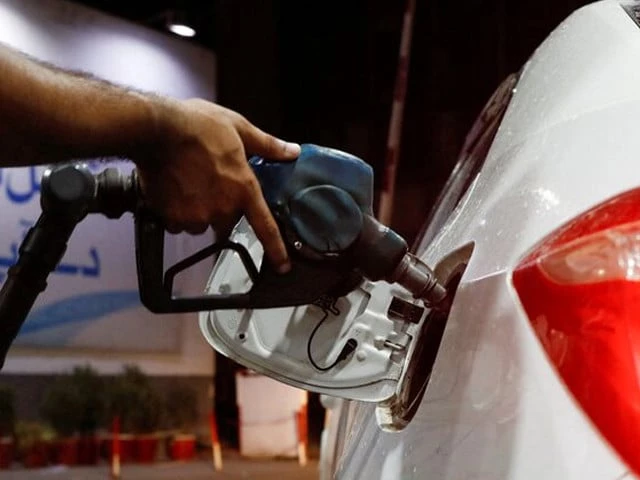
Leaders of the Pakistan Petroleum Dealers Association (PPDA) sounded the alarm on Thursday, alleging that petroleum companies have reduced supply and warned that petrol pumps may begin shutting down within the next few days if supply is not restored.
Speaking at a press conference at the Lahore Press Club, the association’s Central Secretary General Chaudhry Irfan Elahi said the situation had become alarming due to declining fuel deliveries. “Diesel supply has dropped to just 20%,” he said, adding that petrol supplies had also been significantly reduced.
Elahi also claimed that fuel prices were rising sharply due to the disruption, with diesel prices increasing by Rs17 and petrol prices up to Rs35.
Central Punjab President Nauman Majeed said that petrol supply has also been reduced by 50%. He alleged that some private companies had begun hoarding petroleum products.
Lahore President Jehanzaib Malik urged the government to ensure adequate fuel supplies to petrol pumps.“Our demand is that supply should be provided according to our requirements,” Malik said, adding, “Oil marketing companies have stopped supply.”
Read: Iran war: Pak plans to import oil via Red Sea
He also criticised government inspections focusing on petrol stations rather than supply depots. Malik said dealers did not want the public to suffer due to fuel shortages. “We do not want a shortage that creates difficulties for the public,” he said.
Referring to the regional situation, he added that due to the war, the situation has deteriorated, and requested that stakeholders be taken into confidence.
“If the government does not restore supply, petrol pumps will start shutting down from Monday,” he said, adding, “Companies have stopped the supply of petroleum products to push for an increase in prices.”
A day earlier, the All Pakistan Petrol Pump Owners Association addressed a letter to Prime Minister Shehbaz Sharif, raising concerns over a potential petroleum shortage as delays in fuel supply occur. According to the letter, oil marketing companies have reportedly implemented a quota system amid the ongoing Middle East crisis.
“They are either not providing the product or have limited it to such an extent that we hardly fulfil the need of the public, or fuel stations get dry,” they warned. They urged the government to intervene immediately and ensure that oil companies consult with stakeholders before imposing any restrictions.
The association also called for urgent measures to improve the supply of petroleum products and prevent disruption to consumers.
Oil for 28 days
The Oil and Gas Regulatory Authority has said that they have high stocks of oil to meet 28 days of consumption requirement of the country, following pre-emptive measures to import surplus fuel.
Owing to the US-Israel attack on Iran, however, two cargoes of crude oil have been stuck after the closure of the Strait of Hormuz. This channel is 21 miles (33 km) wide and a fifth of the world’s oil passes through it.
The Strait of Hormuz was used to ship an average of 20 million barrels of crude, condensate and fuel per day last year. OPEC members like Saudi Arabia, Iran, the United Arab Emirates, Kuwait and Iraq depend on this shipping lane to export most of their crude, mainly to Asia. “We have ample stocks of petrol and diesel to meet the country’s requirement,” officials said, adding that the country could meet the fuel needs of consumers for 28 days.
However, reports have emerged that the government has planned to import oil through the Red Sea from Saudi Arabia and the United Arab Emirates (UAE) due to the closure of the Strait of Hormuz, while also shifting to a weekly oil price review mechanism.
Sources told The Express Tribune that the government is currently working on various measures to ensure an uninterrupted oil supply amid US-Israel war against Iran.
Pakistan imports around one million barrels of oil on a monthly basis, with Saudi Arabia being a key oil exporter to the country. The UAE also exports oil to Pakistan.
Sources said that UAE-based firm ADNOC and Saudi Aramco will supply oil to Pakistan by bypassing the Strait of Hormuz. One refinery has already imported a few shipments through the Red Sea. A couple of oil vessels have reached Pakistan, while others are en route.
Finance minister unveils fuel conservation plan
Finance Minister Muhammad Aurangzeb on Wednesday formally announced to introduce energy conservation measures to deal with disruption in import of fuels, as the government considers closing higher education institutions and weekly setting fuel prices to deal with the evolving situation.
However, the finance minister said that the country has sufficient stocks of fuels for this month in addition to 10 days’ equal crude oil reserves, emphasising there was no cause for immediate concern.
The minister further added that Pakistan has about 28 days’ equal stocks of petrol and diesel and 10 days of crude oil. There are also LPG stocks equal to 15 days of the country’s requirements, and we are closely monitoring the situation, said Aurangzeb, who is also the Chairman of the prime minister’s Committee to Monitor Petrol Prices in the wake of the emerging situation in the region, which was constituted by the prime minister and met for the third time on Wednesday.
He, however, said that the LNG cargoes have stuck up from Qatar and the government was closely monitoring the situation.
According to a handout issued by the finance ministry, the petrol committee members reviewed energy conservation measures as part of broader contingency planning aimed at managing demand efficiently while maintaining orderly market conditions.
The committee emphasised that while supply conditions remain stable, prudent energy use and conservation at all levels would help strengthen national preparedness should international uncertainties persist, said the finance ministry.
Strait of Hormuz
Vessels have been receiving VHF transmission from Iran’s Revolutionary Guards saying “no ship is allowed to pass the Strait of Hormuz”. The Revolutionary Guards said Iranian forces had “complete control” of the Strait of Hormuz, a vital route for world oil and gas supplies, and any vessels seeking to pass risked damage from missiles or stray drones.
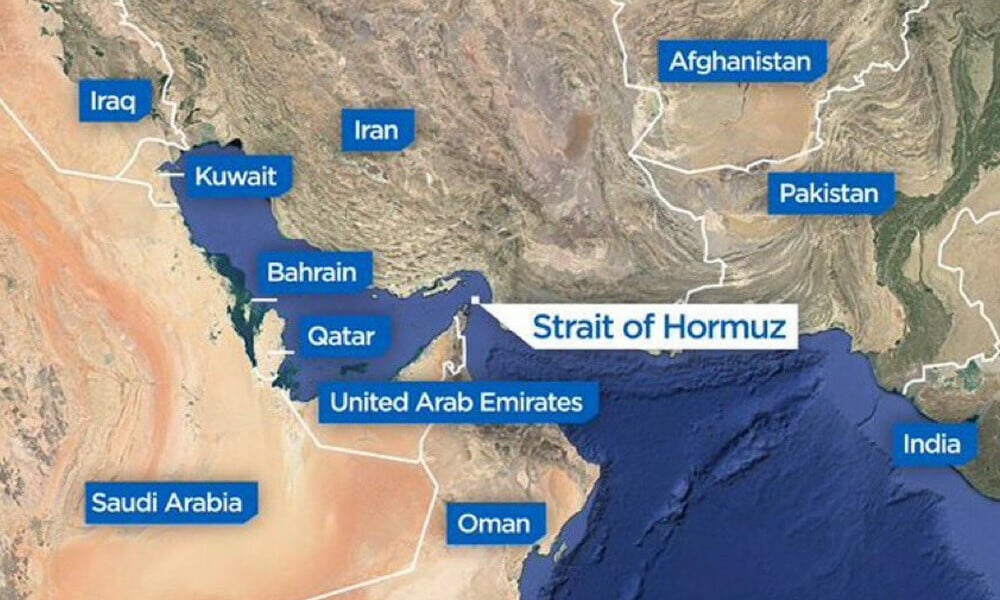
Strait of Hormuz also dubbed as energy corridor as millions of barrels of oil move from one part to another from here. PHOTO: REUTERS
The strait is the world’s most vital oil export route, which connects the biggest Gulf oil producers, such as Saudi Arabia, Iran, Iraq and the UAE, with the Gulf of Oman and the Arabian Sea.
Some 20% of global oil, including from producers Saudi Arabia, the United Arab Emirates, Iraq, Kuwait and Iran, passes through Hormuz along with large volumes of liquefied natural gas from Qatar.
Tehran has for years threatened to block the narrow waterway in retaliation for any attack on the Islamic Republic.
Fourteen LNG tankers have shown signs of slowing down, U-turning or stopping in or around the Strait, said Laura Page from consultancy Kpler, who added the number will likely rise, posing risks to Qatari LNG exports.