By Shakeel Ahmed
The Conference of the Parties (COP) is the largest global United Nations event for discussions and negotiations on climate change. The meeting is held annually, with the presidency rotating among the five UN-recognized regions. The 30th Conference of the Parties In 2025, will be host by the Government of Brazil will take place in Belém, Pará. The chosen city will provide the world with a unique platform to discuss climate solutions, firmly rooted in the heart of the Amazon.
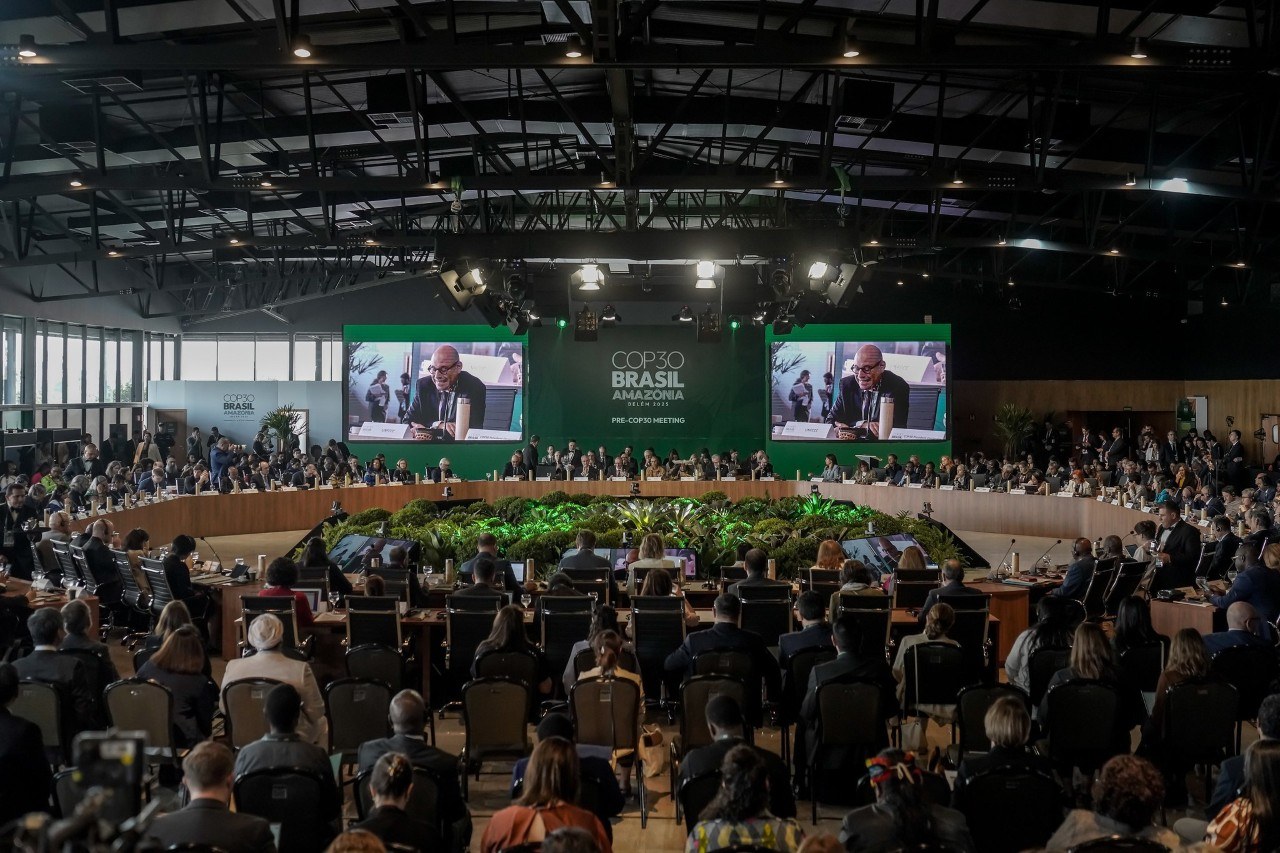
The Pre-COP takes place this Monday and Tuesday, 13–14 October, in Brasilia. The opening session highlighted the need to reinforce multilateralism within the global climate agenda and featured the presentation of outcomes from the Presidency Circles initiative
The Pre-COP began this Monday, 13 October, with a central message emphasizing the advancement of climate agreement implementation as a pathway to strengthening multilateralism. The opening session was attended by the Acting President of the Federative Republic of Brazil, Geraldo Alckmin; the Executive Secretary of the United Nations Framework Convention on Climate Change (UNFCCC), Simon Stiell; and representatives of the COP30 Presidency Circles.
Alckmin opened the session by outlining the pillars that will guide negotiations at the Conference in Belém. “The Brazilian Presidency of COP30 has proposed three central objectives: first, to strengthen multilateralism and the climate change regime within the framework of the United Nations Convention; second, to connect the climate regime to people’s real lives; and third, to accelerate the implementation of the Paris Agreement by promoting efforts and structural adjustments across all institutions capable of contributing to this Endeavor,” stated the Brazilian Minister of Development, Industry, Trade and Services.
“I believe this collective effort of cooperation among nations must be channelled into the COP negotiations and focused on countries’ Nationally Determined Contributions (NDCs) under the Paris Agreement. The submission of NDCs aligned with the 1.5°C target by governments is a decisive signal of their commitment to combating climate change and strengthening multilateralism,” he added.
“May COP30 become a collective effort to implement the agreements reached thus far. May the EGB and the other COP30 mobilization circles contribute to making this Conference a historic turning point—a foundational reference that helped prevent the points of no return, both for the climate and for climate multilateralism,” Minister Silva concluded.